Entradas

MY DAILY WEEK THREE

Imagen
This week We have Removal/Installation of the EDP (Engine Drive Pumps) The EDP serve as the primary hydraulic flow and pressure supply for the hydraulic users within the aircraft system. It should be noted, that the EDP does not supply hydraulic flow at the same speed at with the propeller moves, the EDP has control valves that control the hydraulic flow. For removal there has been no problem, however, for installation, someone moved the propoller, and how the EDP ir geared to the engine, we had a little difficulty in introducing the EDP, but it was resolved quickly by moving the propoller a little, making the EDP fit into the gears. This is the EDP (Engine Drive Pumps): My personal week..... This week I have had many difficult exams, but the truth... I haven't studied because for personal problems...In addition my dear cat 😻, as usual, doesn't let me study in peace, she always put on top of my manuals and when I tell her to go away, she answers:  This weekend I changed the sp...

MY DAILY WEEK TWO

Imagen
  This week we practiced the hydraulic reservoir REMOVAL/INSTALLATION of the Turbocommander 680V. To do this I had to get into a very small compartment, and since I am the smallest, as always, almost all the work was done by me, although I don't mind, I really like mechanics and I love being busy.  There was a mosquito that bit me 30 times on my arms (💥*30), so my patience was reduced even more than the space I had to work  This is de Hydraulic Reservoir:  The  hydraulic reservoir  is a container for holding the hydraulic fluid required to supply the system, normally the most common hydraulic is called Skydrol, this fluid es very danger 💀 so  special care must be taken, use the corresponding EPIS.  An instructor advised us to have milk 🐄 because if the hydraulic fluid falls into the eyes 👀, it is very painful and milk calms the pain  Well... You know my tour from Globalia to My house 😵 And my crossfit training from monday to fr...

MY DAILY WEEK ONE

Imagen
In Globalia: We are giving theoretical and practical classes on aircraft systems, more specifically ATA29 Hydraulic Systems A hydraulic system uses a fluid under pressure to drive machinery or move mechanical components. All aircraft make use of some hydraulically powered components. In light, general aviation aircraft, this use might be limited to providing pressure to activate the wheel brakes. In larger and more complex aeroplanes, the use of hydraulically powered components is much more common. Depending upon the aircraft concerned, a single hydraulic system, or two or more hydraulic systems working together, might be used to power any or all of the following components: wheel brakes nose wheel steering landing gear flaps and slats thrust reversers spoilers/speed brakes flight control surfaces etc Hydraulic system consists of the hydraulic fluid plus three major mechanical components. Those components are the “pressure generator” or hydraulic pump, the hydraulically powered “moto...

WELCOME TO GLOBALIA

Imagen
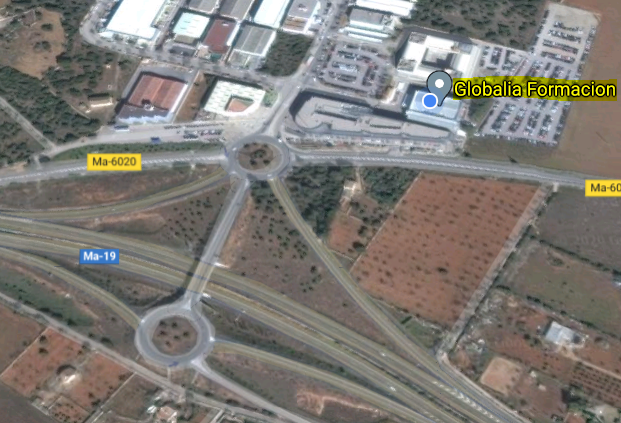
 To get to Globalia Formación, take the Ma-19 towards Llucmajor. The exit is number 22 towards the Son Noguera industrial estate. As soon as you arrive at the polygon, you will quickly find Globalia, the first large building on the right. You can park outside freely or inside as a visitor if you are not registered at the security control. You are the red spot,  Directions to the general building: Directions to the training building where the students are: When you enter the building, you must wear your mask and clean your hands with hydroalcoholic gel, there are dispensers all over the building. You must climb the stairs and go to class number 12. I hope that with these directions you can reach Globalia without problems, otherwise you can click on this link and the Google Maps GPS will indicate you perfectly. Indications Google Maps

D-CHECK

Imagen
Aircraft maintenance   checks are periodic inspections that have to be done on all commercial and civil aircraft after a certain amount of time or usage. Military aircraft normally follow specific maintenance programmes which may, or may not, be similar to those of commercial and civil operators The D check, sometimes known as a "heavy maintenance visit" (HMV), is by far the most comprehensive and demanding check for an airplane. This check occurs approximately every 6-10 years. It is a check that more or less takes the entire airplane apart for inspection and overhaul. Even the paint may need to be completely removed for complete inspection of the fuselage metal skin. Such a check can generally take up to 50,000 man-hours, and 2 months to complete depending on the number of technicians involved. It also requires the most space of all maintenance checks, and as such must be performed at a suitable maintenance base. The requirements and the tremendous effo...

CHAPTER 2

Imagen
1º Find the contrary of these charasteristic FRAGILE - STRONG LIGHT - DARK RIGID - FLEXIBLE CLEAN - DIRTY ROUGH - SOFT HOLLOW - FULL INERT - ALIVE STRAIGHT - DISTORTED SHINY - MAT POINTED - ROUNDED 2º Find an item on an aircraft made of each os these materials COPPER  In  aircraft ,  copper  is  used  primarily in the electrical system for bus bars, bonding, and as lockwire STAINLESS STEEL  Common  uses  in the  aircraft  industry include jet engines, exhaust ducts, flanges, piston engine exhaust manifolds, afterburners, flash boilers, and more HONEYCOMB  Honeycomb  sandwich structures are widely  used  on  aircraft  flight control surfaces such as rudder, aileron, spoiler, and flap.  FABRIC  Currently, only a few approved fabrics are used for aircraft coverings, such as the  polyester  fabrics Ceconite™, Stits/Polyfiber™...